Kenneth Kronenberg mail@kfkronenberg.com
Member: New England Translators Association (President 1997-2001)
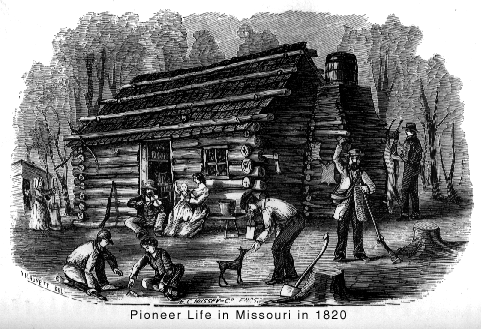
(Very idealized version!)
What follows is a few paragraphs from a large body of letters I translated for a German client, members of whose family emigrated to Missouri and western Illinois in the 1840s-1860s. Their letters home are a treasure trove of detail about daily life, local customs, and politics. This selection is from a letter by Theodor van Dreveldt dated May 6, 1845. Lives and Letters of an Immigrant Family: The van Dreveldts' Experiences along the Missouri, 1844-1866 was published in 1998 by the University of Nebraska Press.
| Da ich die hiesigen Verhältnisse gründlich kennen
zu lernen wünsche, so will ich eigene Erfahrungen machen
und mußhalb selbst Hand anlegen. Lensing hatte wenig
Platz und deshalb baute ich ein eigenes Haus bei dem
seinigen nach hiesiger Art. Es besteht nur aus Holz, hat
lediglich vier Wände und eine Mittelwand sowie eine
Vorhalle auf vier Säulen. Das Haus ist 22 Fuß lang und
18 Fuß tief; in der Mitte einer Längswand befindet sich
die Tür; die Mittelwand ist 8 Fuß von der östlichen
Wand entfernt. Die Ostseite hat ein Fenster und die
nordwestliche den 6 Fuß langen Herd. Der untere
Holzblock in der Erde wird etwas kantig gehauen und der
folgende bekommt einen "Klik" und dann von der
oberen Seite wieder eine Kante und dann der dritte Block
einen Klik und von oben wieder eine Kante und so fort,
bis man die gewünschte Höhe hat; an meinem liegen 11
bis 12 bis zum Dach hin. Viele behauen nun nachher die Blöcke , auf daß sie besser aussehen und austrocknen und die Würmer nachher inwendig durch das Zerfressen der Borke nicht lästig fallen; ich aber finde es amerikanisch schöner mit dem Baste und denke auch nicht so lange so zu wohnen; wie wohl ein solches Haus, wenn es noch nicht ganz dicht gemacht ist, im Sommer bedeutende Vorzüge hat, indem es viel kühler darin wegen der Zugluft ist. Die Ritzen nämlich, die natürlich durch eine kleine Krümmung des Holzes entstehen, werden mit kleineren Holzspännen und -stückchen ausgefüllt und dann zusätzlich mit Lehm von außen vollends verschmiert. In den behauenen geschieht dieses wohl inwendig mit Kalk, und das ganze geweißt, sieht dann wir eine weiße Wand bei euch aus. Viele Häuser hier haben gar keine Fenster, sondern zwei Türen gegenüberliegend. In dem kleineren Raum in meinem Haus stecken in den von Süden nach Norden laufenden Wänden 4 Stangen, welche zwei Bettstellen bilden. Diese Stangen sind mit Hickori- Nußbaum-Bast verbunden, welcher so zäh ist wie Leder, und auf diese liegen die Betten von Noot und mir recht gut und luftig. Das Dach ist fon "Klapboorde", dieses sind 4 Fuß lange und 6 bis 8 Zoll breite, 1/2 bis 1 1/2 Zoll dicke Bretter, so wie's kommt; auf besseren Häusern hat man Schindeln, die regelmäßiger gemacht sind und ein reguläres Dach machen. Ein Haus wie das beschriebene würde man für 30-35 Dollar können bauen lassen. Meist ist der Fußboden von abgeflächten Blòcken, diese waren zu holzerich, weshalb ich Tannenbretter vorzog. Ein Haus wird hier in einem Tag gerichtet. Vier Mann stehen auf den Ecken und behauen die Blöcke. Dieses ist keine leichte Arbeit und erfordert eine geübte und starke Hand. Es gibt nur wenige, die dies gut verstehen. Die Nachbarn helfen sich bei derartigen Arbeiten unentgeltlich. 15 bis 20 Mann sind zu einer Hausrüstung nötig. Türen, Fenster und Schornstein werden später hineingefügt. |
Since I want to get to know the local conditions
thoroughly, I need to experience the land myself and get
my hands dirty. Lensing didn't have much room, so I built
my own house near his in the local style. It is made only
of wood, has four walls and a center wall as well as an
entry hall. The house is 22 feet long and 18 feet deep.
The door is located in the middle of a long wall; the
central wall is 8 feet from the east wall. The east side
has a window and the northwest side has a six-foot long
fireplace. The lower wooden log on the ground is squared
off; the next log is grooved and on the upper side is
squared off again. The third log is grooved and squared
on the top and so on until the desired height is reached.
My house has 11 or 12 logs up to the roof. Many people hew the logs afterward so that they look better and dry out. Then the borers, which eat the wood from the inside are less of a nuisance. But I think it is nicer and more American with the inner bark. However, I don't think I'm going to live like that for long. Anyway, such a house has advantages in the summer if it is not completely tight because it is much cooler as a result of drafts. The chinks that occur naturally as a result of slight curvature of the wood, are plugged with small wood chips and then sealed with loam on the outside. In the hewn ones, this is done on the inside with lime and the whole wall is whitewashed. It then looks like one of your white walls. Many houses here have no windows but have two doors on opposite sides. In the smaller room in my house, there are 4 poles along the wall running from north to south; they form 2 bedsteads. The poles are connected with the inner bark of the hickory, which is as tough as leather, and Noot and I place our beds on these. It's nice and airy. The roof is made of clapboard, which are boards about 4 feet long, 6 to 8 inches wide, and 1/2 to 1 1/2 inches thick (as available). The better houses have shingles that are made more uniformly and produce a more regular roof. A house such as I have described could be built for $30-35. The floor is usually made of flattened logs, but these were too rough and so I preferred pine boards. Over here, a house is put up in a single day. Four men stand at the corners and hew the logs. This is no light work and requires a strong and practiced hand. There are not many who know how to do it. Neighbors help each other with such tasks at no charge. About 15 to 20 men are needed to frame a house. Doors, windows, and chimney are set in later. |
In 1848, Theodor spent a winter in Wisconsin so he could observe the Indians. He was a little less enthusiastic about the cracks in the cabin walls!
| Du weißt, wie man hier baut, man legt Blöcke aufeinander, füllt die Ritzen mit Lehm und Dreck aus. Es war aber zu weit im Winter, als ich baute, um dieses zu tun, denn alles war steif gefroren, und hätte ich mit vieler Mühe durch warmes Wasser einige Ritze am Tage ausgefüllt, so hätte der Frost es in der Nacht wieder herausgeschmissen; ich versuchte also mit Schilf und Gras die Öffnungen zu füllen, und daß dieses keine dichte Wand macht, siehst Du wohl ein. Der Wind bläst von allen Seiten durch, und das Schlimmste ist, ich habe keinen Herd gebaut, sondern mich auf einen kleinen Ofen verlassen und wenn es etwas kalt ist und der Wind geht, kann man nur, an der Erde liegend, den Ofen als Schutz gegen den Wind nehmend, warm werden, und oft ist das einzige Mittel, sich zu schützen, das Bett. Einmal auch konnte ich in demselben nicht warm werden und nur durch ein junges Hündchen, was ich an die Füße legte, entwich der Schmerz. | You know how building is done here: one lays logs on top of each other and fills in the chinks with loam and dirt. It was too late in the winter for me to do this because everything was frozen stiff, and if I had with great effort filled a few cracks by using warm water during the day, the frost at night would have dislodged it again. I tried to fill the chinks with reeds and grass; I think you will quickly see that this does not make a tight wall. The wind blows through from all sides, and the worst thing is that I didn't build myself a fireplace but am relying on a small oven. When it is cold and windy, the best I can do is lie on the ground and use the oven as protection and for a little warmth. Sometimes, the only way to stay warm is to lie in bed. Once, I couldn't even get warm there, and only by placing a puppy at my feet did the pain go away. |
Lives and Letters of an Immigrant Family: The van Dreveldts' Experiences along the Missouri, 1844-1866 was published in 1998 by University of Nebraska Press. To read excerpts from the book, click below:
Priest Goossens and His Children
Theodor Begs for the King's Mercy
Anton "Makes Friends" in America
Young Bernhard's Courtship
To view sample translations in the following areas, click on:
Medical Translation Services
Holocaust Related Translations
Click below for:
Editorial Services
Return to Home page
Return to Translation Services
To inquire about my services and rates, leave an e-mail message at: mail@kfkronenberg.com